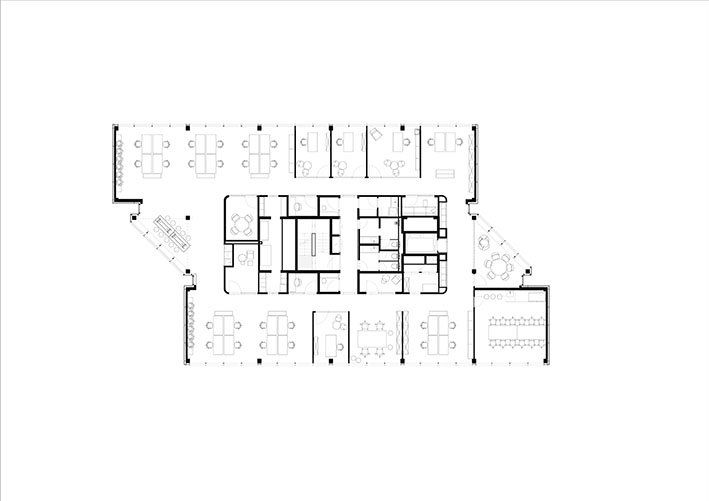
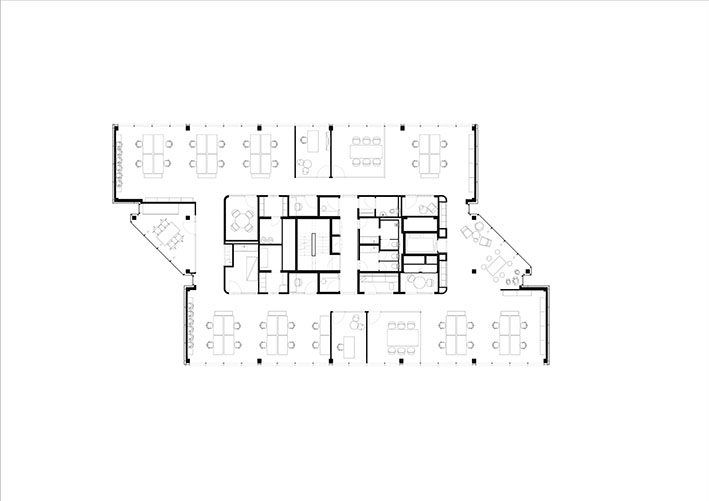
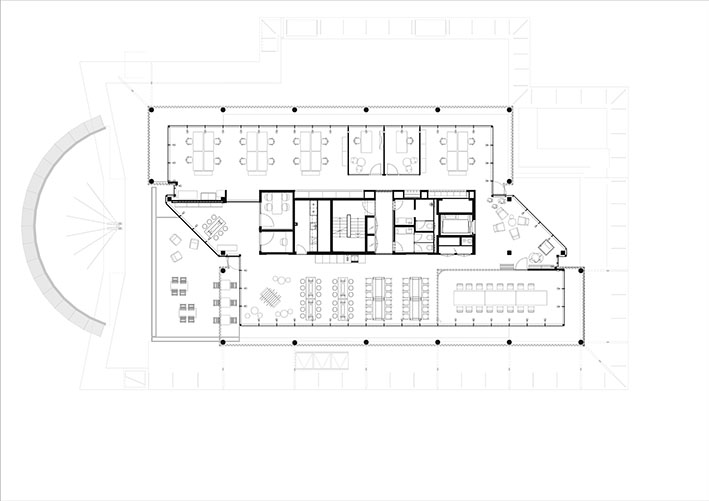
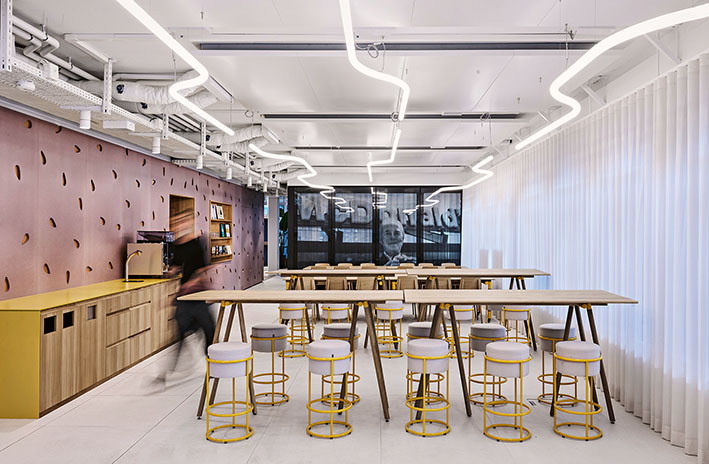
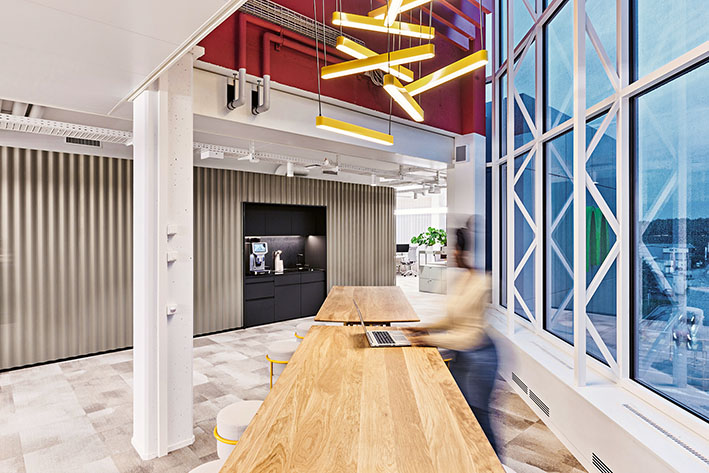
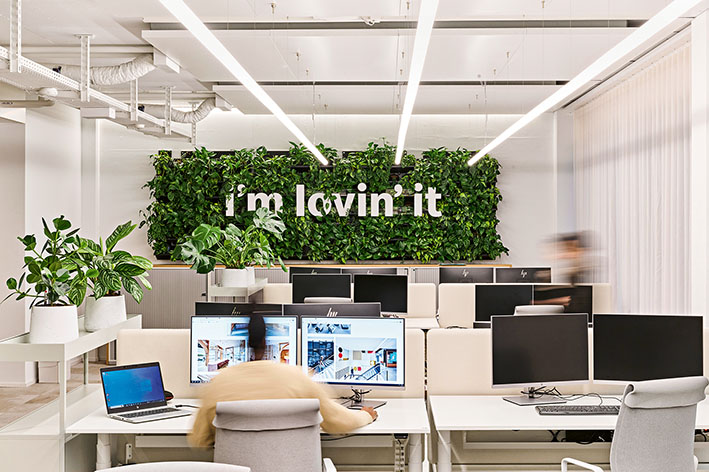
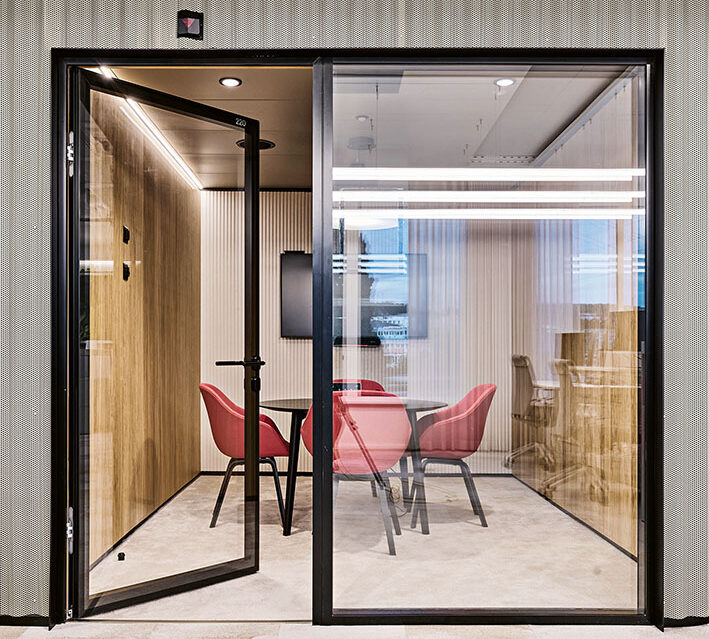
If we look at the contemporary workplace of a company from this perspective, this idea aligns seamlessly with the concept of open space. After all, it too is about enabling exchange and interaction, as well as energizing processes and flows of information. Consequently, McDonald’s also opted for this approach at its headquarters in Switzerland. A total of 1,590 square meters of office space, spread across the first to third floors of a more than 40-year-old commercial building, provide room for activity for 120 employees. Here, the previously cellular office layout gave way to an open working environment designed by Mint Architecture and developed through a participatory process in which employees and management clearly voted in favor of open space combined with a desk-sharing principle. Within this setting, different spatial typologies and zones emerge. They differentiate and adapt optimally to specific work processes. On the first floor, the canteen, terrace, event space, and the frequently used boardroom are grouped together, while the workstations are located above, primarily along the window façade. Its smart glazing adjusts its transparency according to the incidence of light, thereby enhancing energy efficiency. The building core accommodates vertical circulation with stairs and elevators, as well as restrooms and tea kitchens. Meeting rooms and individual booths are attached to it. This centrally positioned block features perforated corrugated metal, black-framed glass doors, built-in elements made of oiled oak, and acoustic elements inspired by restaurant design. For ad hoc meetings, confidential conversations, focused work, and similar activities, the workspace offers niches and enclosed rooms here and there, as well as the occasional separate executive office. The planning workshops developed design narratives expressed through colors, materials, and details, with the corporate colors yellow and red playing a prominent role. Green is also present—introduced through selectively placed plants and green walls. In this way, accents are created, for example in the double-height interaction zone—along with a pleasant indoor climate.