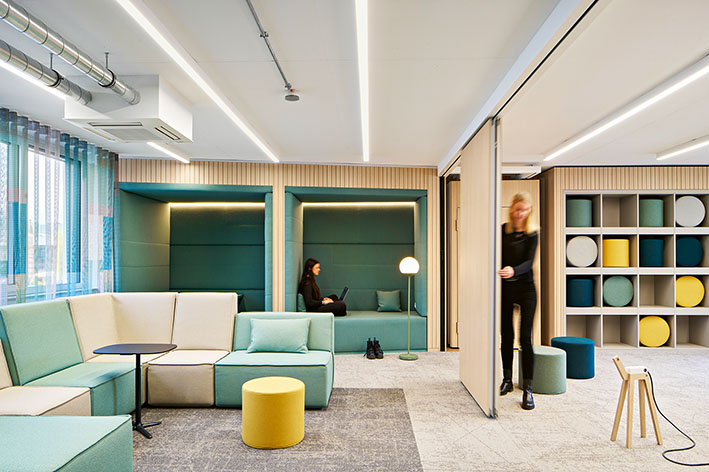
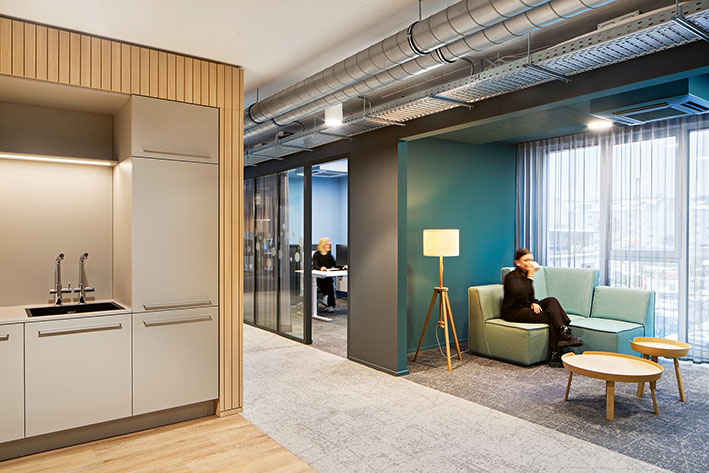
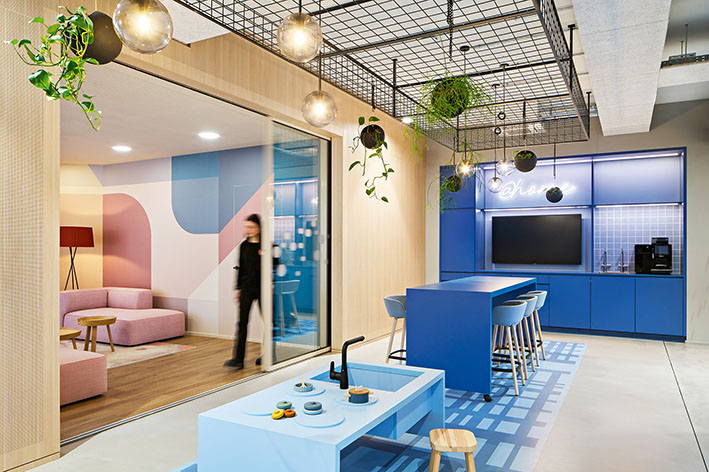
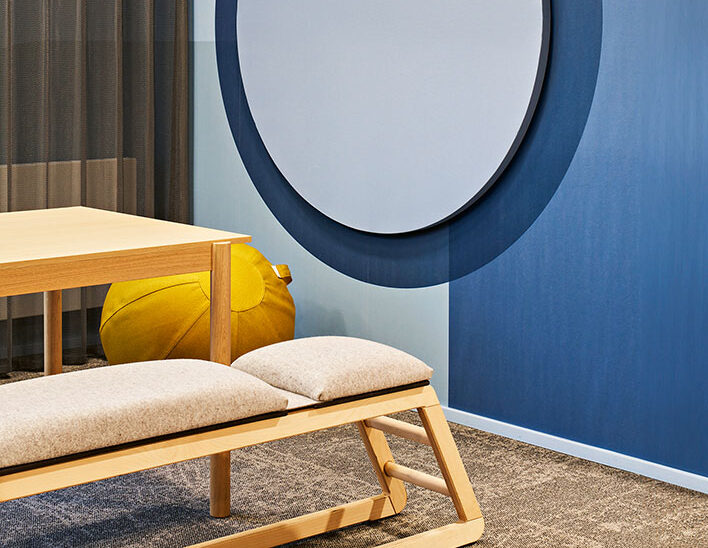
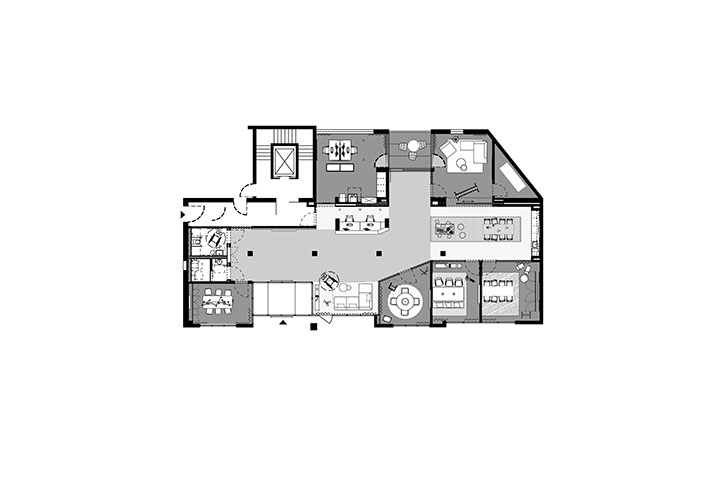
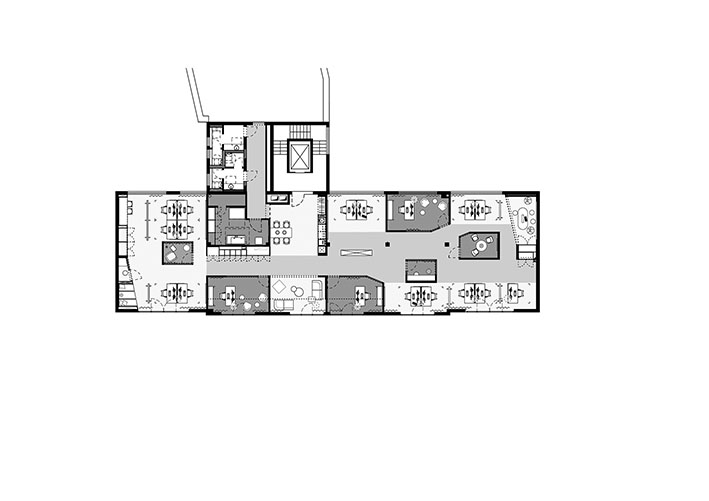
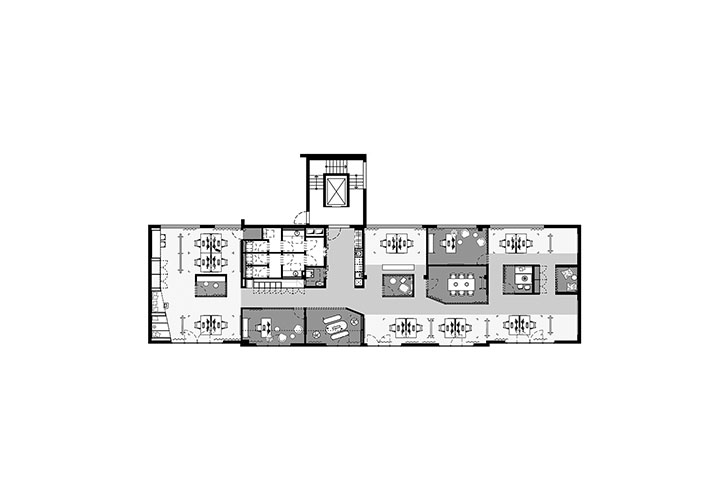
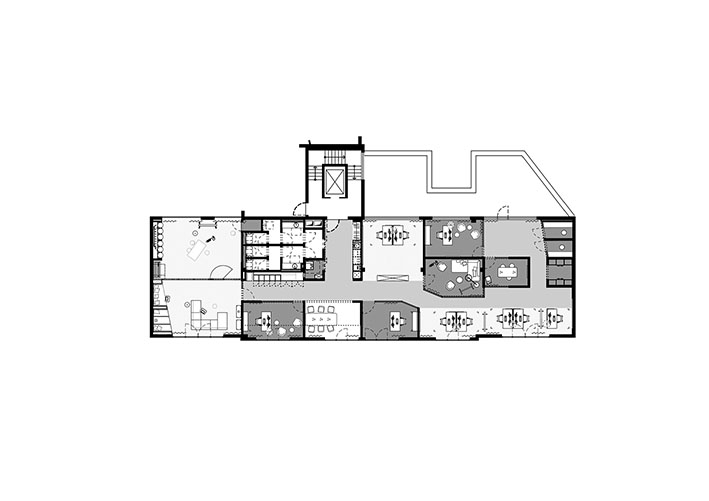
And yet, some interiors come quite close to serving the common good, don’t they? Especially in the case of a non-profit housing association such as GWG Wuppertal, the interest in such an approach to interior architecture is entirely understandable. Under the title “A New Working Environment for the Housing Sector,” the company recently realized a tailored workplace within its existing building stock, together with the interior designers from bkp. A total existing area of 1,300 square meters made it possible to create 870 square meters of new office space for 80 employees, distributed across floors with predominantly elongated rectangular layouts and an attached stair and elevator core. Zoning into central and peripheral areas was an obvious strategy. Abundant daylight — also thanks to transparent partitions — creates a light and pleasant atmosphere. Workstations along the façade benefit from light wood, open structures, and natural light, resulting in an open and inviting appearance. This is where the broader community benefits. It also fosters a sense of appreciation, largely conveyed through the detailed and user-oriented interior design. Wood surfaces, high-quality textiles, structured panels, and carefully selected colors all contribute to this effect, supported by the natural qualities of the materials and tones. Orientation and structure are provided by the “neighborhood” concept: each floor is individually designed, with its own characteristic layout. The central communication and interaction space is the “marketplace” with a coffee bar. Surrounding it are modular lounge zones, open team workstations, and quiet focus areas. Specialized functions are located in the central zones of the floors: meeting rooms, phone booths, focus rooms, and private offices. This is also where circulation paths intersect, encouraging spontaneous encounters and exchange.