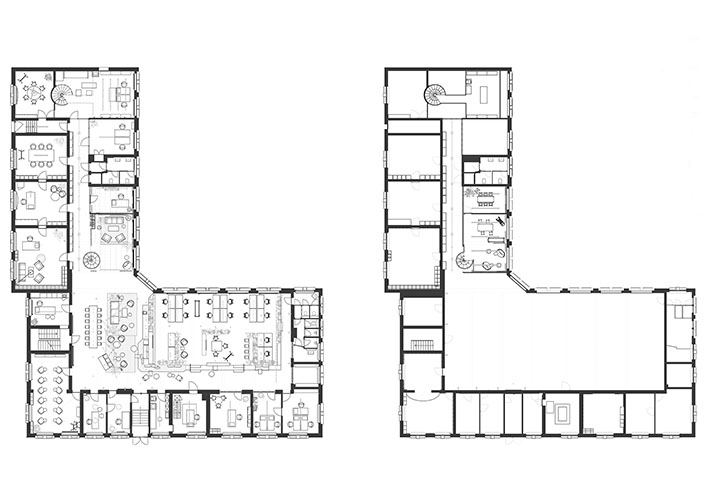
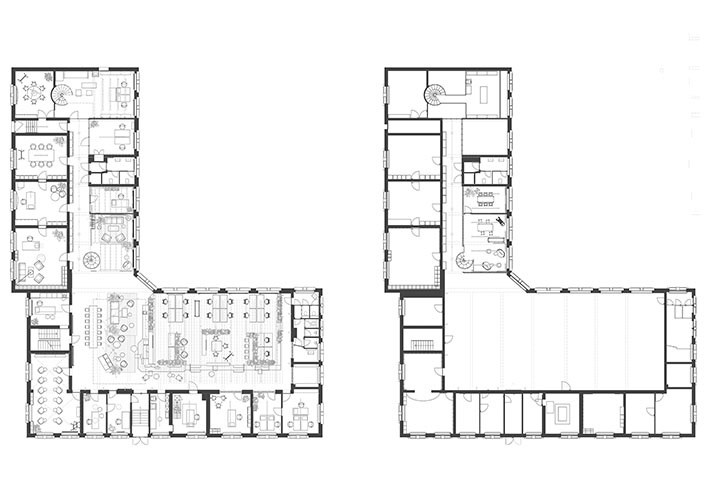
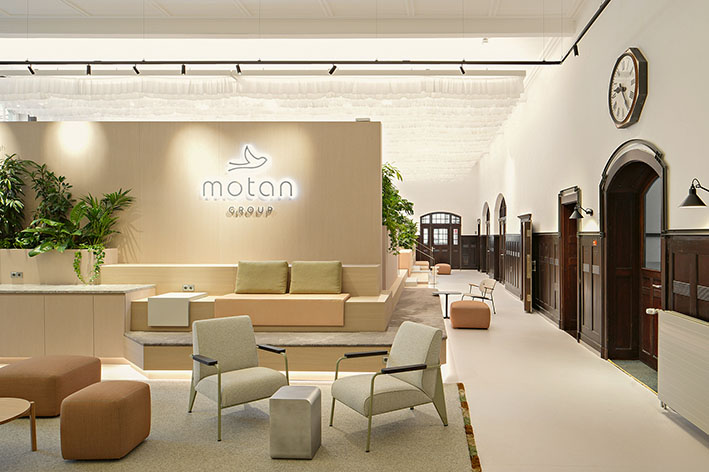
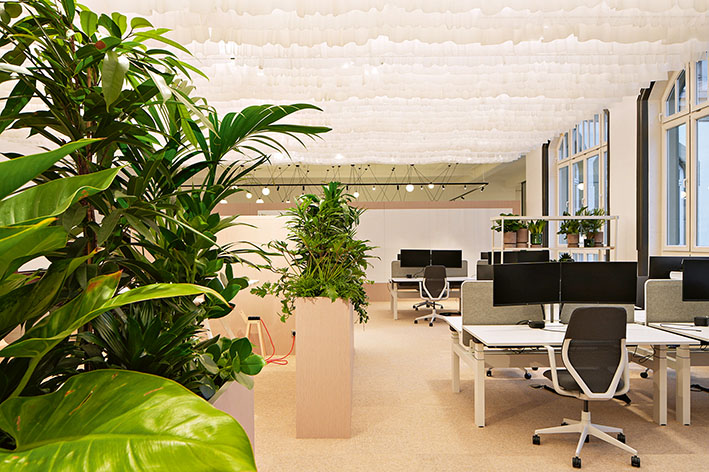
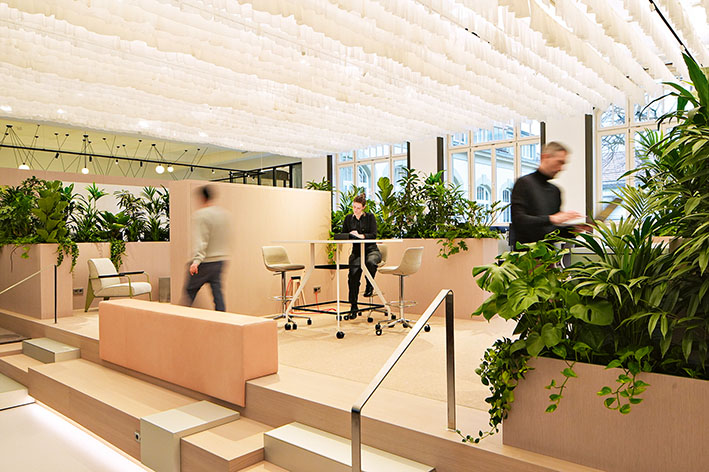
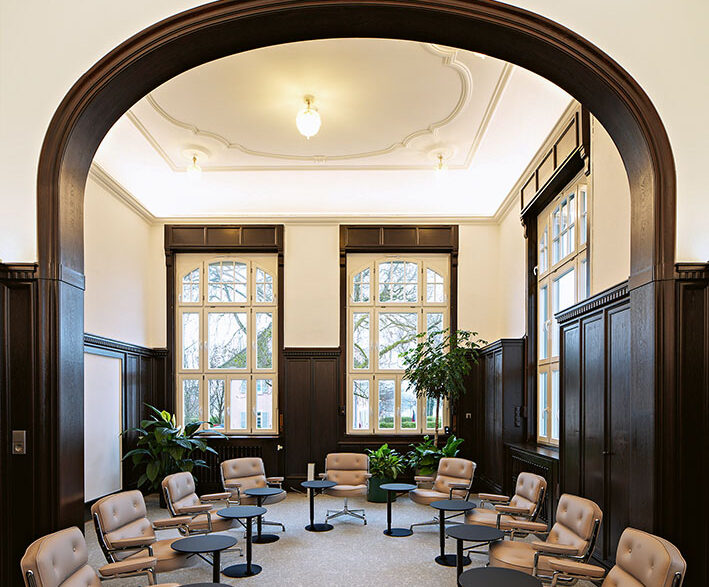
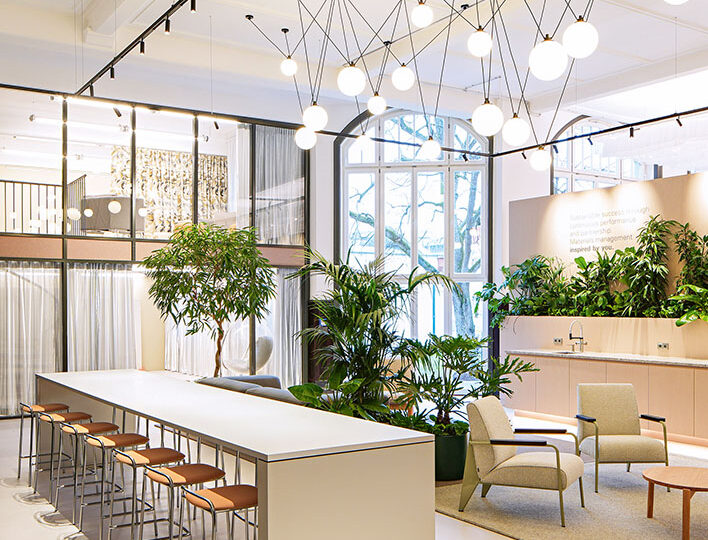
To achieve this, an industrial building with significant historical presence and a central, station-like hall was adapted. This space is defined by five-meter-high ceilings, exposed steel beams, large windows, and continuous wood paneling — creating a challenging volume that, at the same time, contributes ideally to the formation of identity. The interior design by LEIK translated this into a “Communication Harbour,” a marketplace for encounters — serving as an arrival zone that encourages informal conversations and spontaneous meetings, thereby fostering exchange, networking, and a sense of community. The hall’s volume is counterbalanced by a platform structure that acts as a solid center, defining the space and dividing it into different zones. From focused work to spontaneous meetings, this “work platform” supports the conscious shift between various modes of working. In the two-story unit dating from the 1990s, additional spaces for agile processes, workshops, and creative work were created—referred to as the “Exchange Hub.” A modular structure and the targeted opening up of existing elements increase transparency, promote the exchange of ideas, and generate a new working dynamic. Natural materials such as wood surfaces respond to the existing building, while plants and natural textiles enhance physical well-being. Individually controllable lighting concepts complement the abundant natural daylight. The result is an environment in which New Work not only provides space for individual work processes and open communication zones but also presents itself as a “health-promoting working environment.”