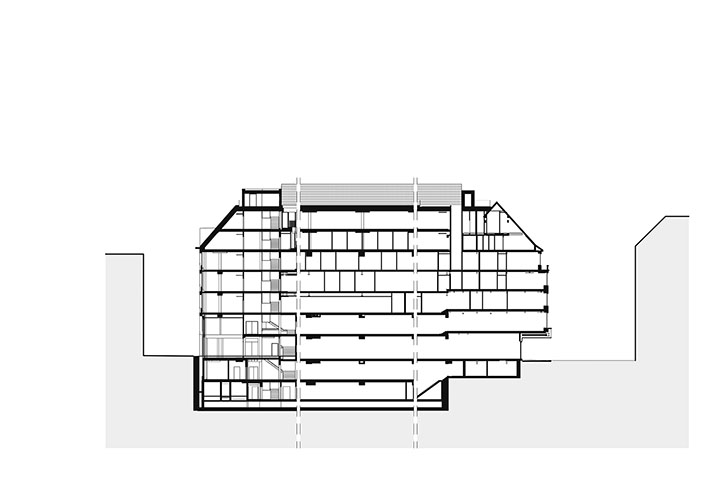
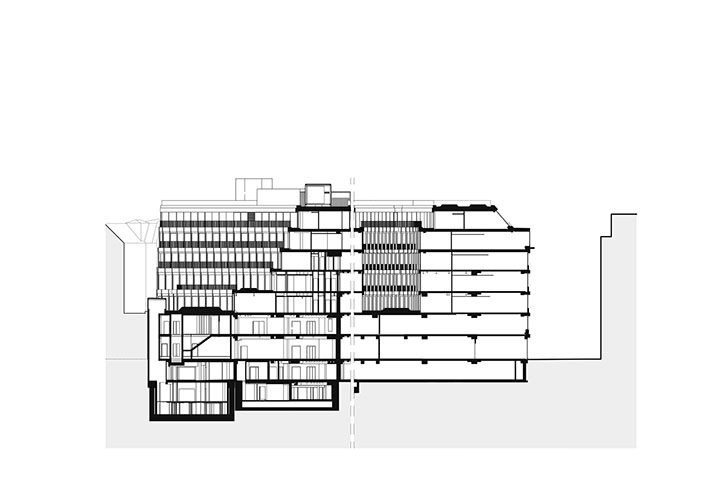
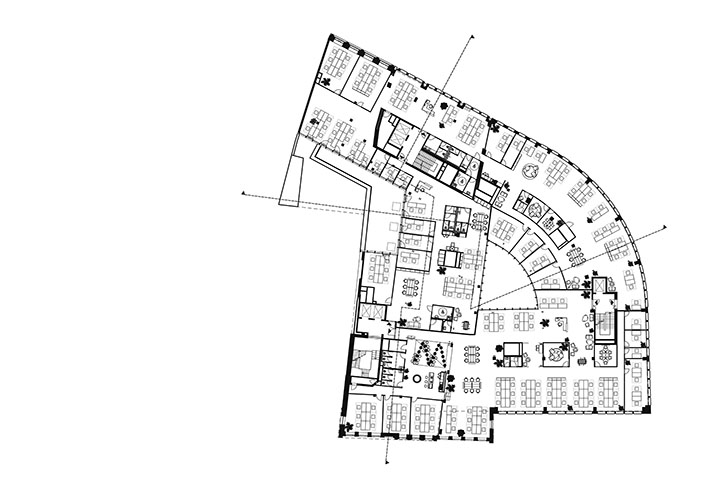
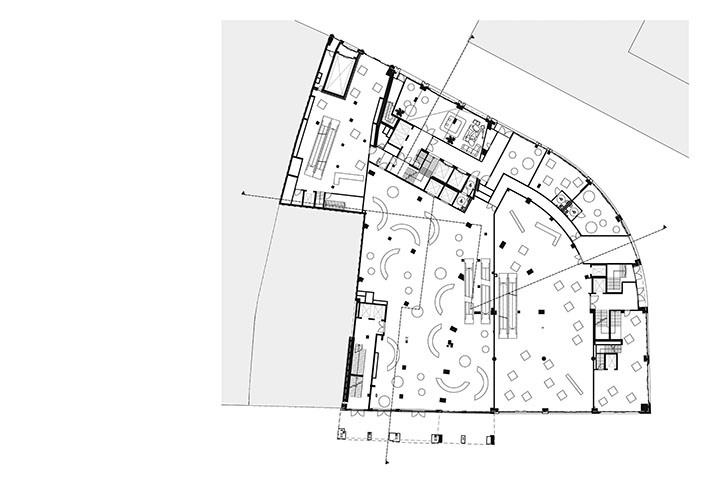
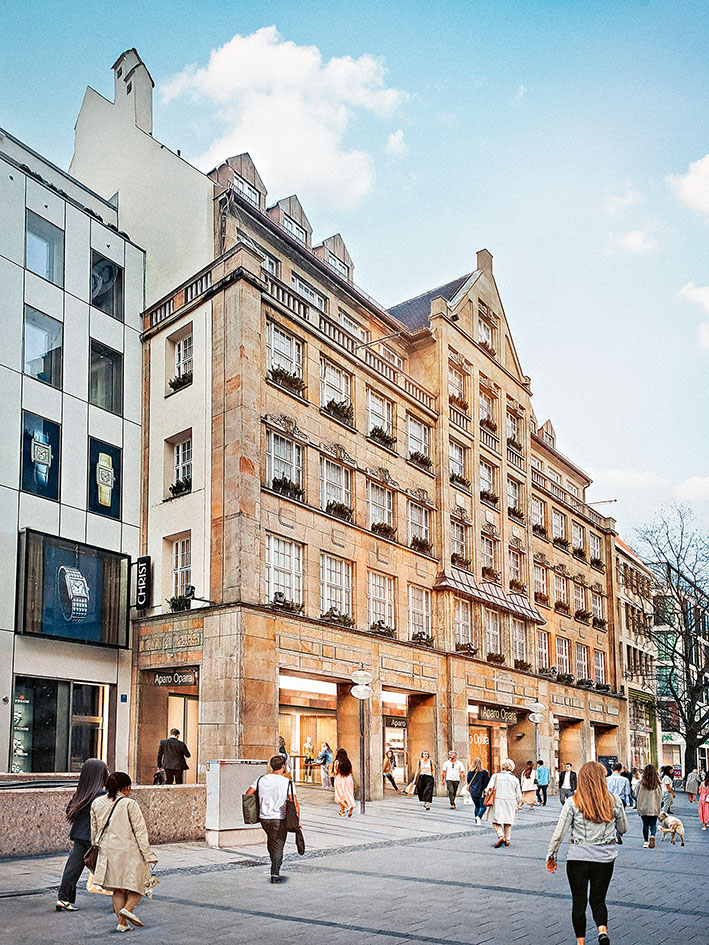
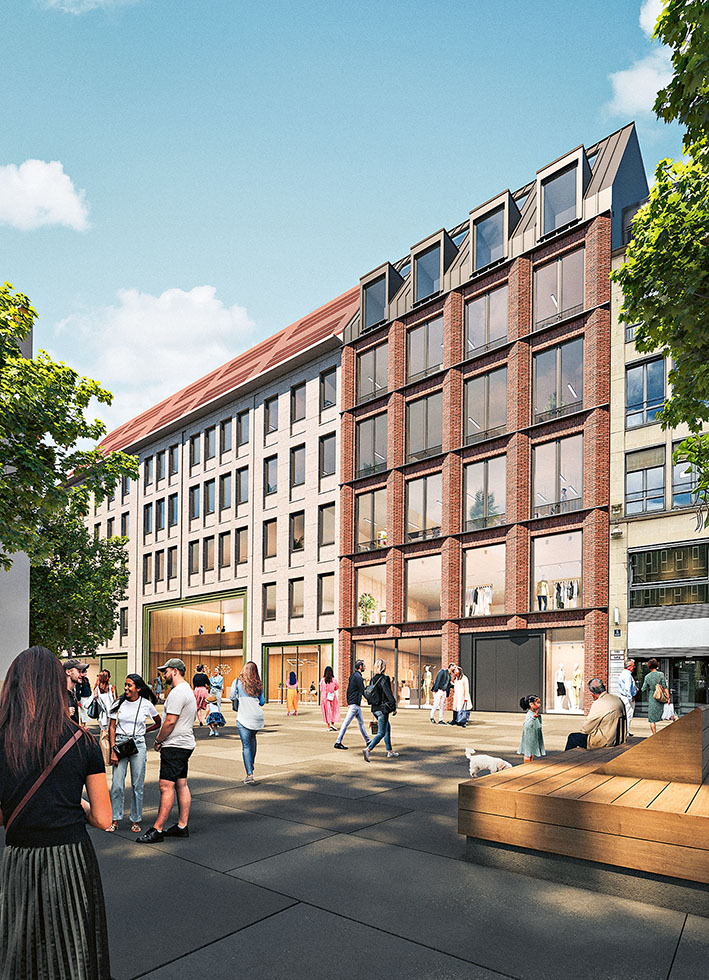
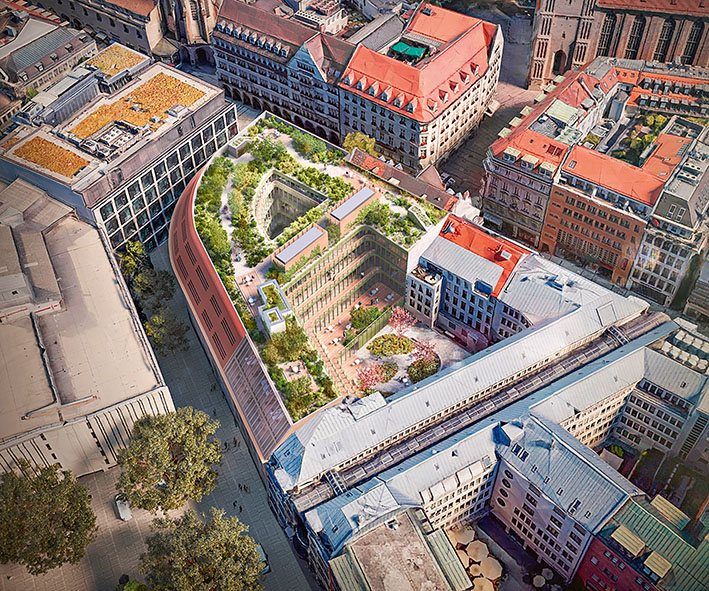
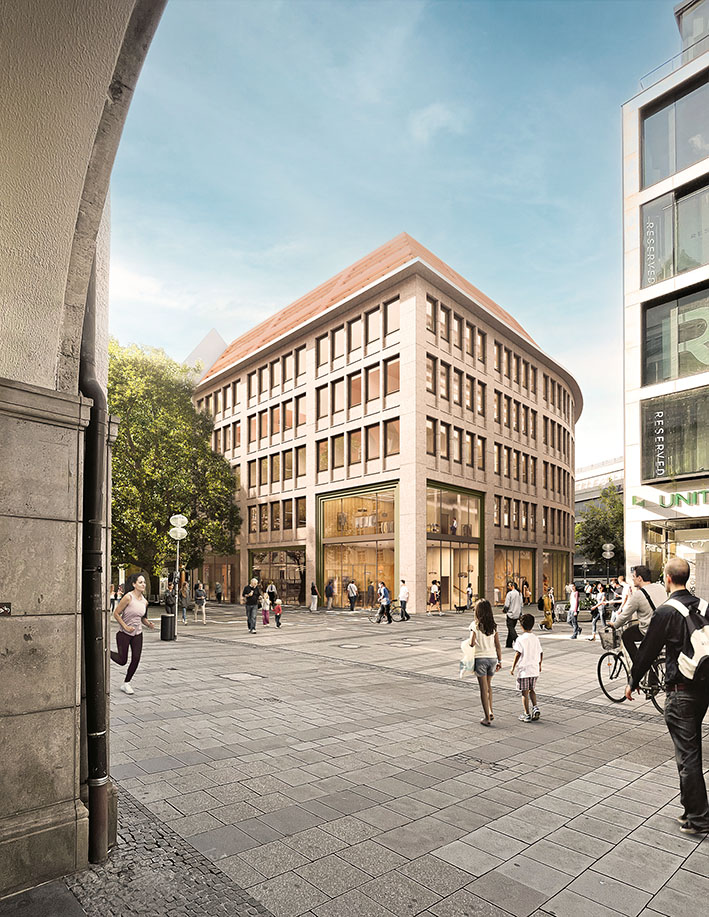
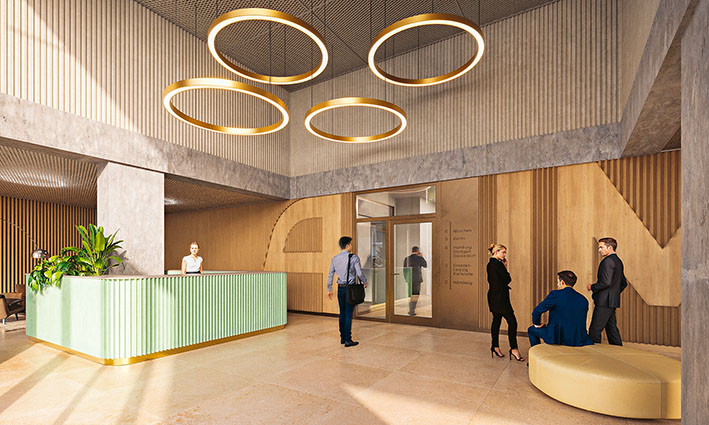
The task is to preserve the character of the postwar buildings while transforming the heterogeneous conglomerate of structures, construction periods, and façade designs into a new urban building block. The concept therefore предусматривает retaining 75 percent of the existing structure. The aim is to preserve as much of the building fabric as possible while integrating state-of-the-art technologies to reduce primary energy demand and enable the use of renewable energy sources such as photovoltaics. The planning goal is to develop a multifunctional building that meets contemporary requirements in terms of usability, flexibility, and sustainability. Each floor is designed to accommodate flexible functions while offering high-quality spaces for both use and stay. A mixed-use concept has been selected: retail will occupy the basement level (UG 1) through to the first floor (OG 1). Existing residential units will be relocated and preserved as part of the restructuring, while the upper floors will house the aforementioned flexible office spaces, enabling modern working environments. Newly created open spaces on rooftops and within courtyards are intended to improve the microclimate and, through their specific design, promote biodiversity in the urban environment. All new construction measures are designed to be as CO₂-neutral as possible, supported by the selection of materials such as recycled concrete. Ultimately, it is the role of the architectural language and detailing to strengthen the ensemble — with its preserved and formally updated presence — as a defining element of the city center’s identity, ensuring it remains relevant and adaptable for future uses and generations.