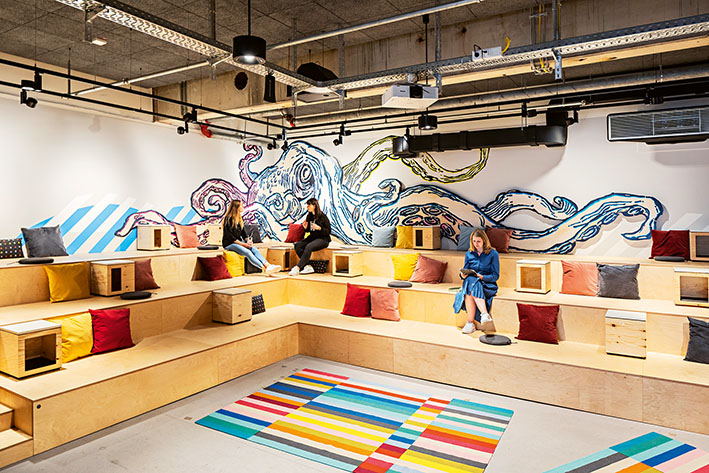
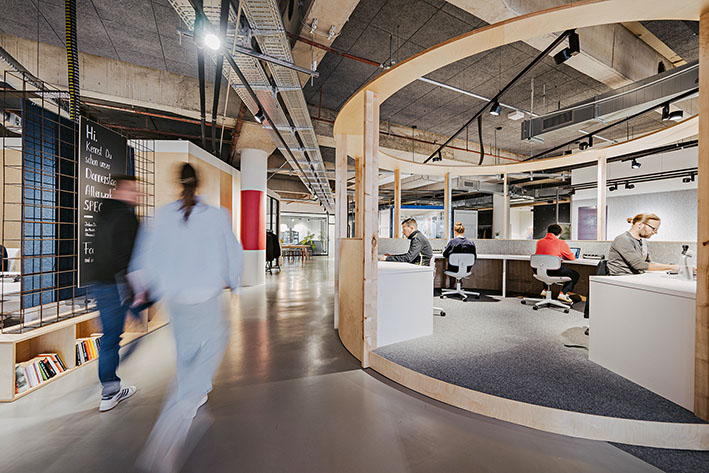
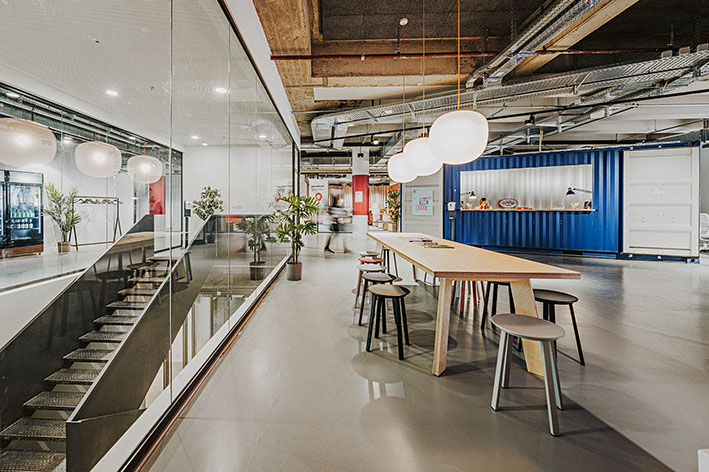
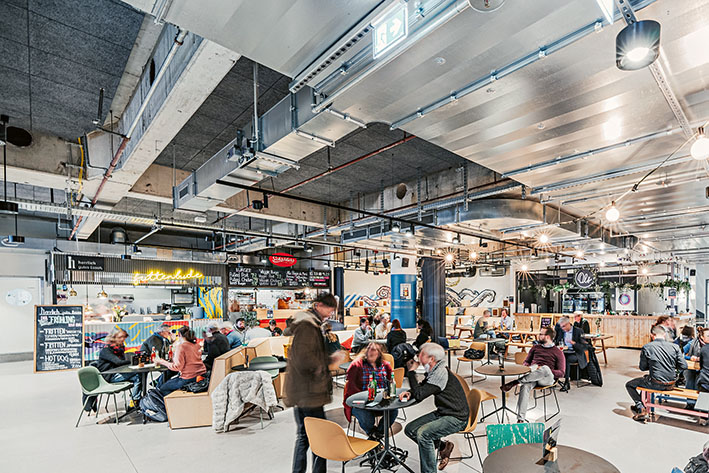
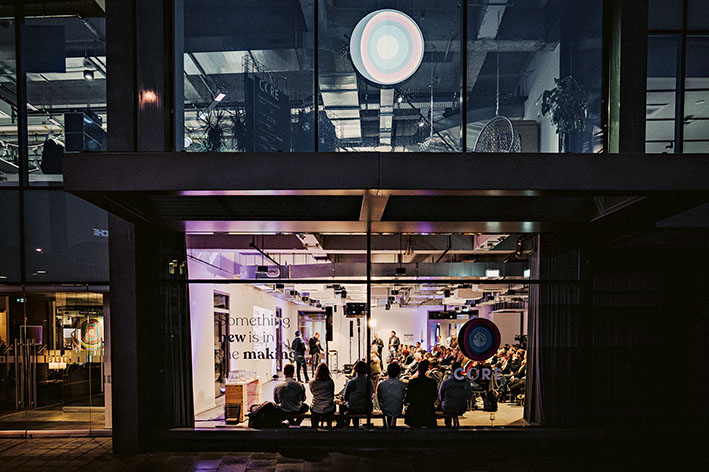
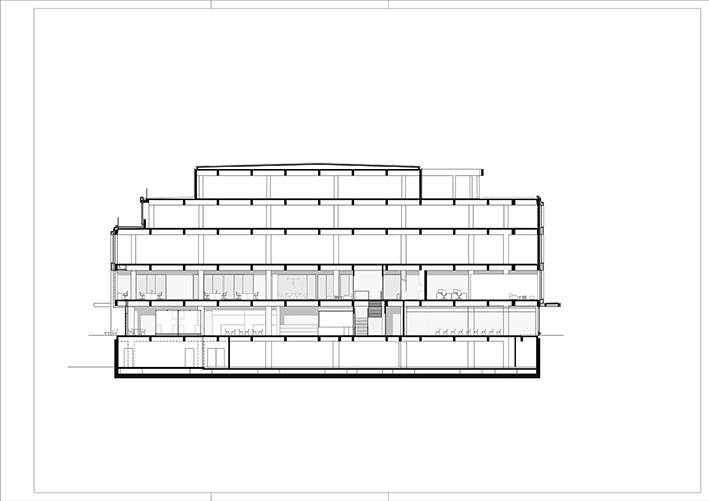
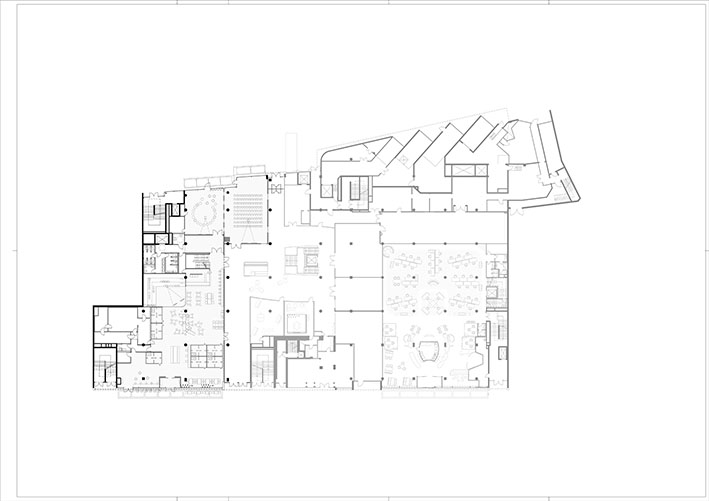
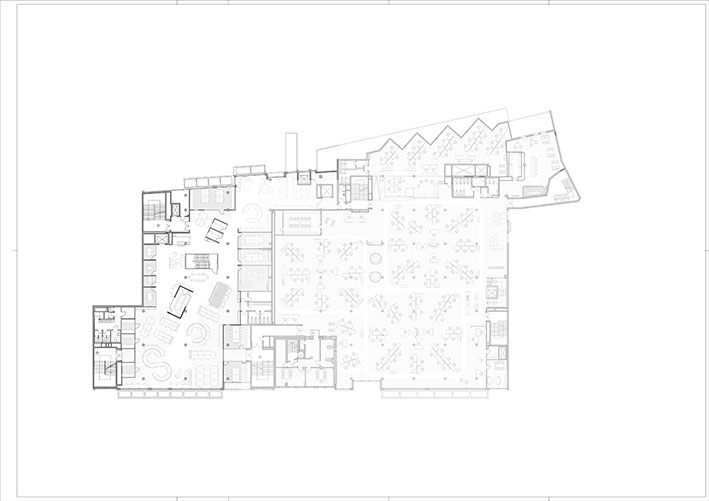
With this description, we’re likely not far off—at least not light-years away—from CORE. That’s the name of an innovation platform that combines co-working, dining, and events. In the heart of Oldenburg, in the building that once housed the former Hertie store and the City Center that followed it, two floors were restructured for CORE with a mixed-use concept. As a creative mix of uses, the space now offers 807 square meters of office space with dining facilities spanning 573 square meters. Thirty-one employees manage the co-working space with 150 fixed workstations, the food service, and event operations— so this is no small platform. The clients’ goal of creating an optimally productive hub for a “diverse community” depended from the outset on whether the right users would move in. What could be planned and guaranteed, however, by entrusting the design to a good firm, was the quality of the interior architecture— “relaxed interaction, new encounters, and a creative environment.” To this end, a publicly accessible market hall was created on the ground floor with a bar, street food stalls, and an outdoor area. For these stalls, only a framework system was provided, which vendors could customize individually—this ensured a vibrant diversity. A grandstand and two auditoriums make it possible to host events that can then engage in positive interaction with the food service offerings. On the first floor lies the functionally designed co-working area, whose façade concept incorporates the city’s motifs already chosen for the market hall. A boulevard runs through the open spatial structure, featuring individual workstations, small to medium-sized offices, work islands, meeting rooms, and quiet zones. The central hub and meeting point of Office World is located in front of the reception area, housed in a former shipping container. In a sense, it also embodies the principle of productive movement, of interaction, and of many interesting connections within this spatial framework.