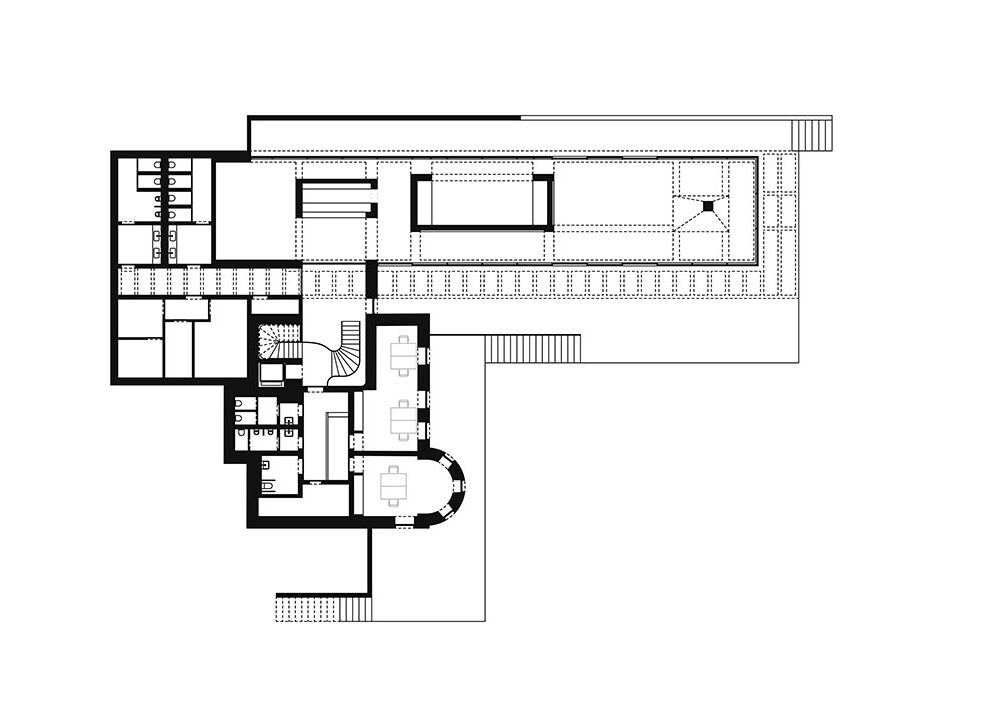
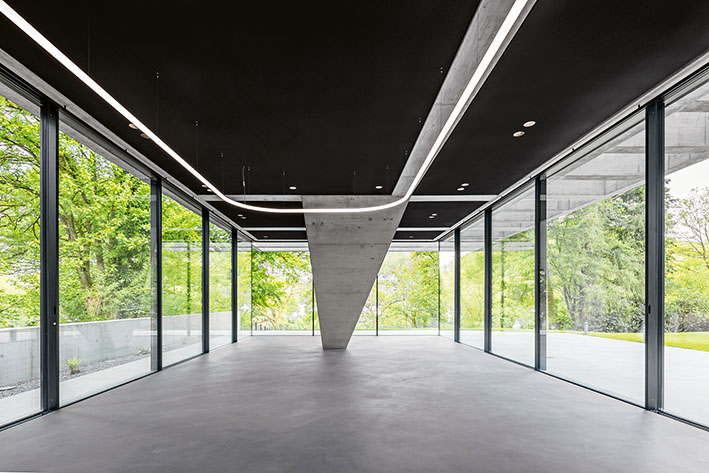
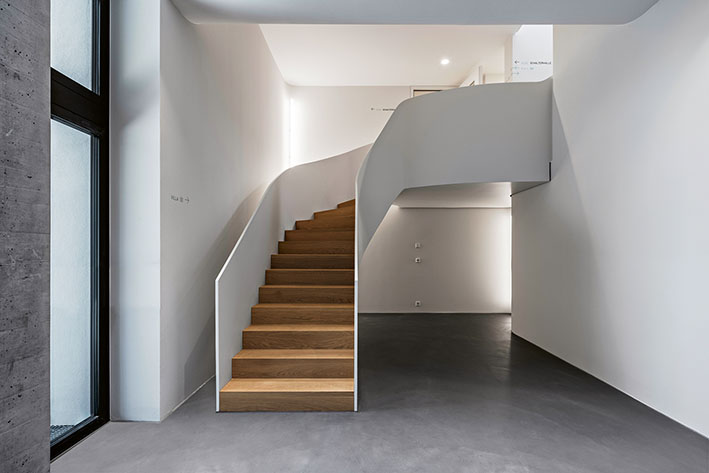
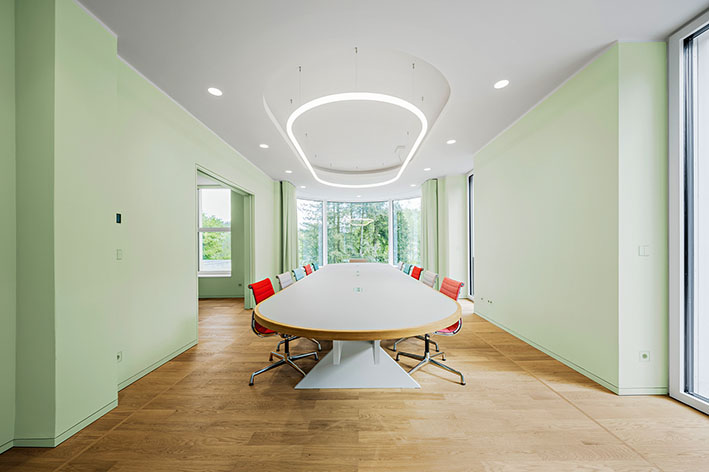
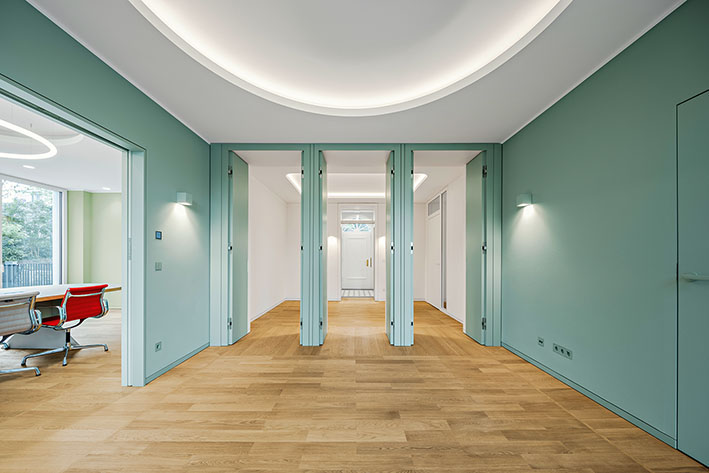
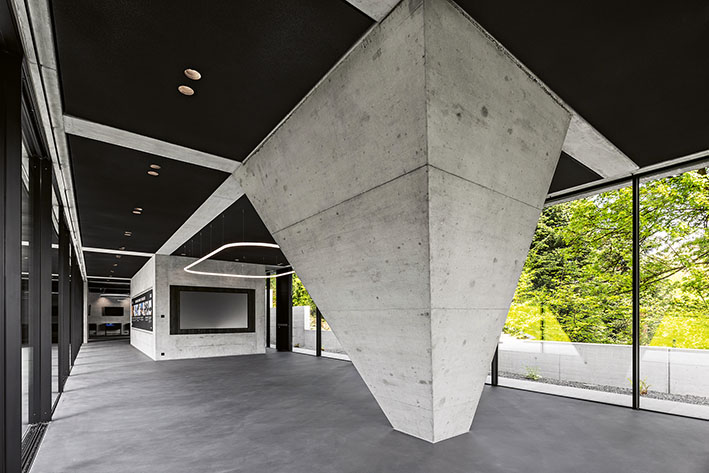
The original site was given a new function: as a place for communication, collaboration, and encounters — as a think tank, event venue, and service center for the brand. To achieve this, the villa was converted into a multifunctional building. The areas for office use and mixed functions — events, exhibitions, and residential use — are now almost evenly distributed: 359 and 353 square meters respectively. The grounds, preserved in an appealing park-like layout, are nearly ten times as large. The timelessly designed interior of the ground floor, with reception and meeting rooms, features light wooden floors, a coordinated color scheme, simple and reduced detailing, and built-in furniture elements. Additional offices are located on the upper floor, while the attic accommodates two apartments. A new structural connection — overcoming a height difference of five and a half meters — creates a seamless transition to the new building on the garden side, known as the “Schalterhalle.” In contrast to the historical atmosphere of the villa, a reduced modernity prevails here: coffered ceilings, exposed concrete, and glass. Striking features include a multi-curved steel staircase connecting to the existing building and a large inverted pyramid-shaped column. This supports the heavy concrete roof and lends formal tension to the expansive space, which is strongly connected to the garden through its glazing. The building services were designed intelligently. The lighting concept offers various scenarios and is sensor-controlled. In the new building, a central compact ventilation system with heat recovery supports climate efficiency. Even though much of the design remains rooted in history, the overall result is a thoroughly contemporary workspace.