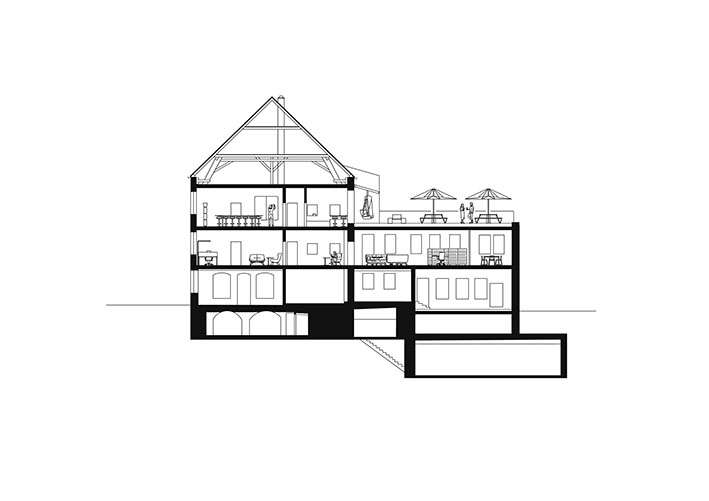
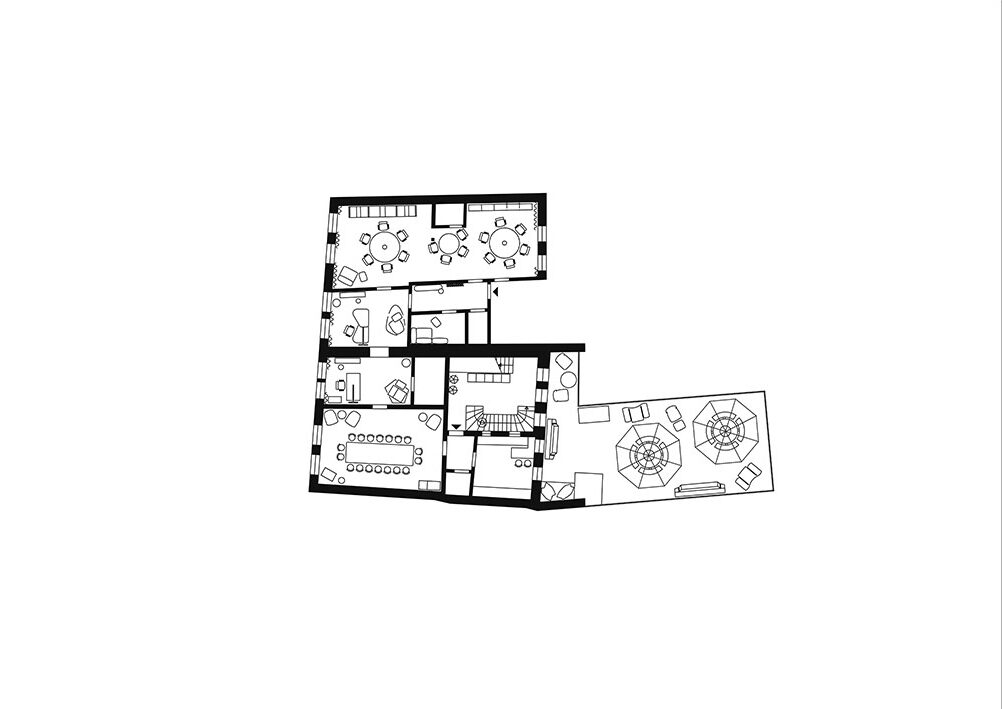
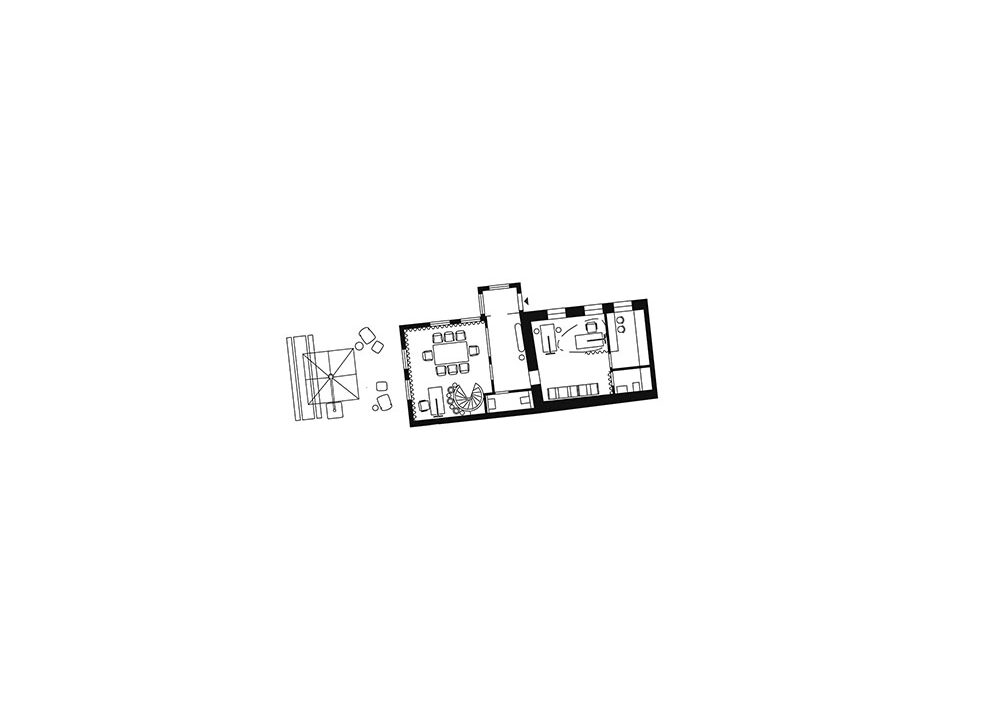
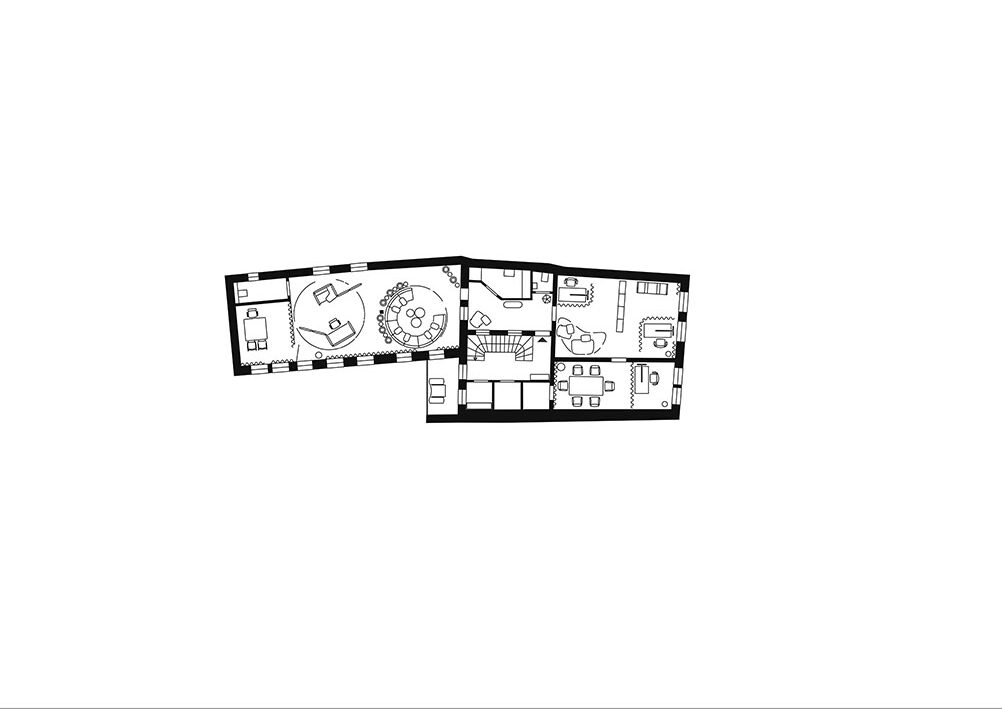
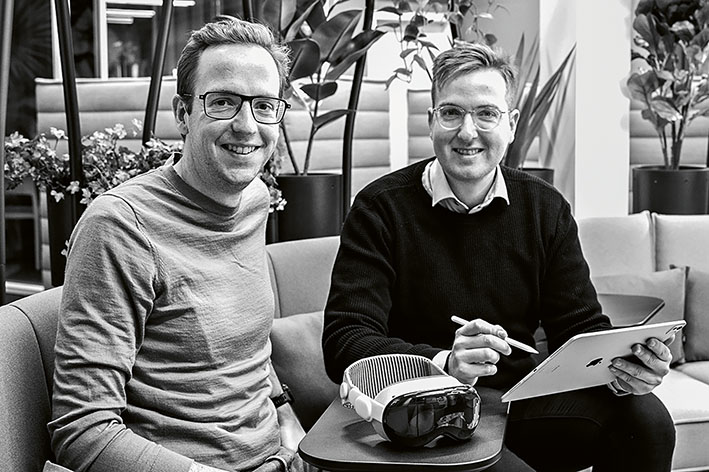
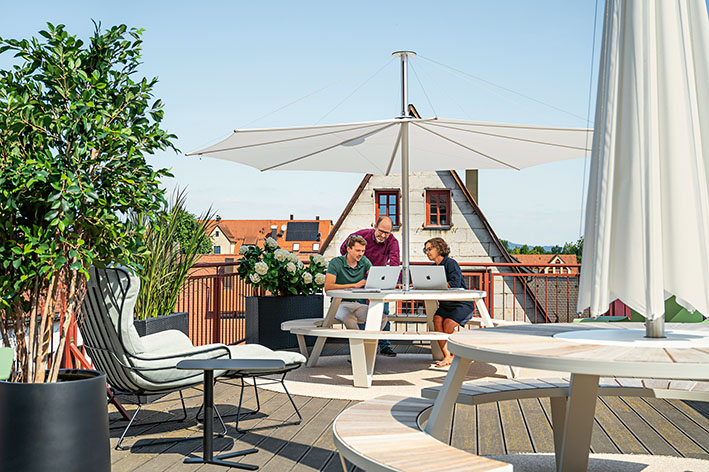
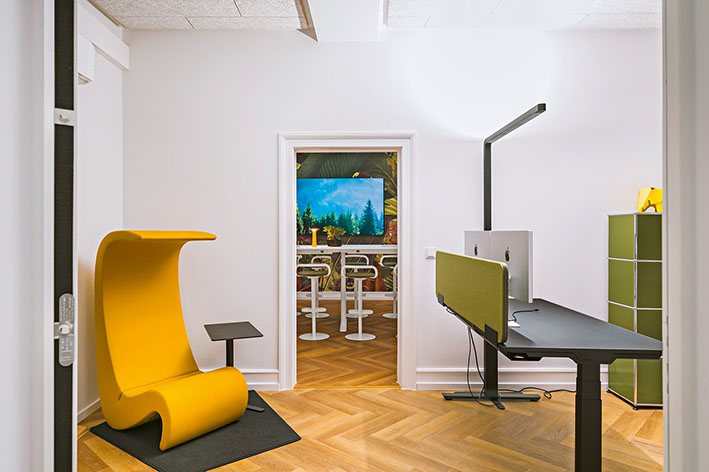
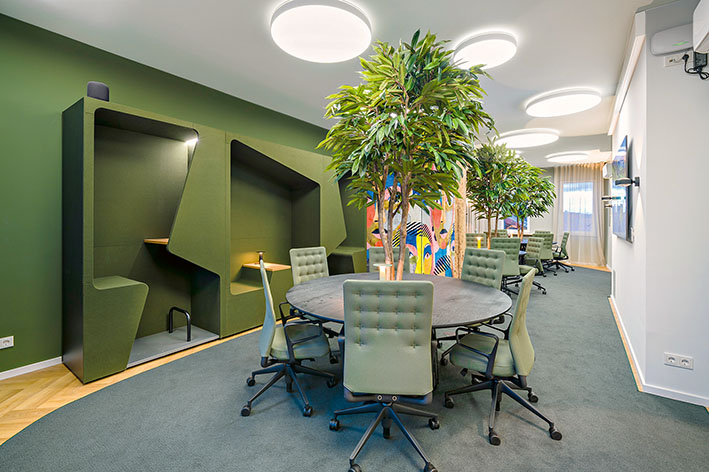
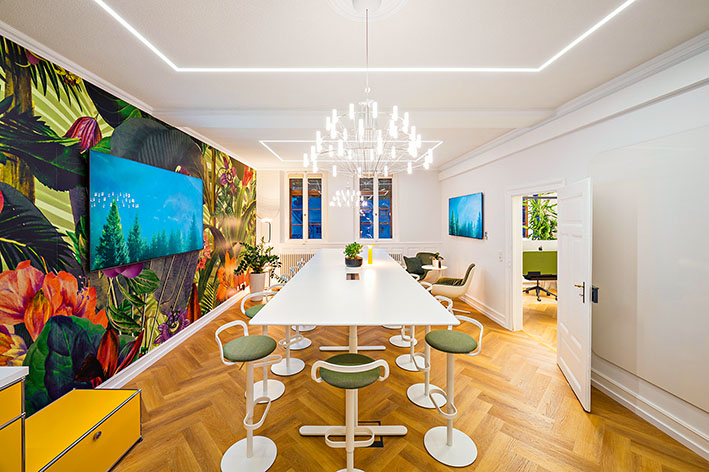
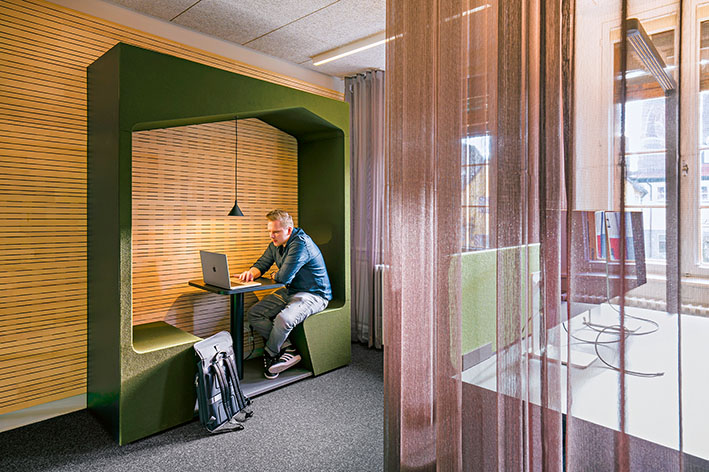
When the shaping of buildings and spaces is described with the prefix “trans,” this signals an additional dimension. Today, transformation does not only mean, in terms of work processes, transferring much from the analog to the digital, but also, in a physical sense, being committed to what already exists. Schwarz Architekturbüro in Altdorf near Nuremberg can attest to this, as they decided to conceptually update and redesign their own premises—a historically evolved inner-city structure dating back to the 19th century. This required renovation while operations continued. A total of 405 square meters of office space was allocated for 25 permanent workstations. An open and flexible zoning concept was introduced, offering settings for all modes of work: from focused tasks to spontaneous encounters, from teamwork to shared lunches. Desk sharing is the standard; everyone is given a mobile “backpack” and can use everything—the booth, the conference table, armchairs, the project area, or the large marketplace on the upper floor. This is supported by a new technical infrastructure, including central screens for hybrid meetings and decentralized access management for software and data, enabling location-independent work—a brave new world. The interior architecture reinforces this approach, enhancing its place-making and identity-forming qualities through the adaptation of the existing structure. A distinctive color concept runs throughout, based on the complementary colors red—for presence—and green—for renewal. This renewal takes place at conventional desks, in spaces of possibility such as corridors, the tea kitchen, seating areas, and so on, or even on the rooftop terrace with its long communal table. The architects know exactly how to design and define a dynamic and precisely tailored workspace for themselves. This is also reflected in the profession-specific naming of the various areas: marketplace, town hall, alley, bistro, glasshouse, or library, among others. A true working world.