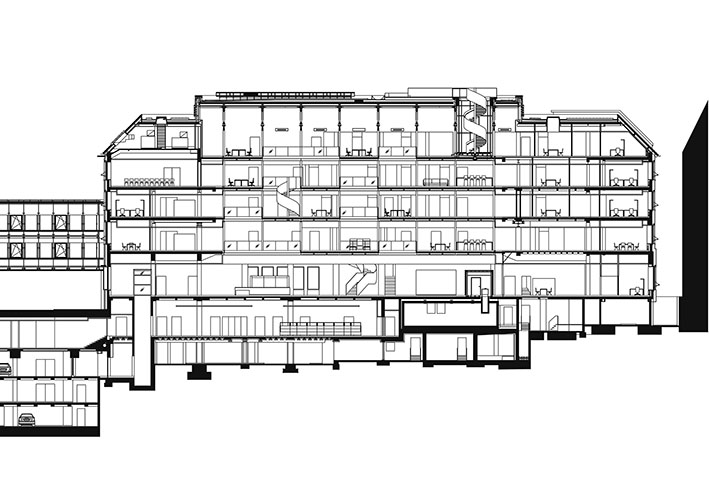
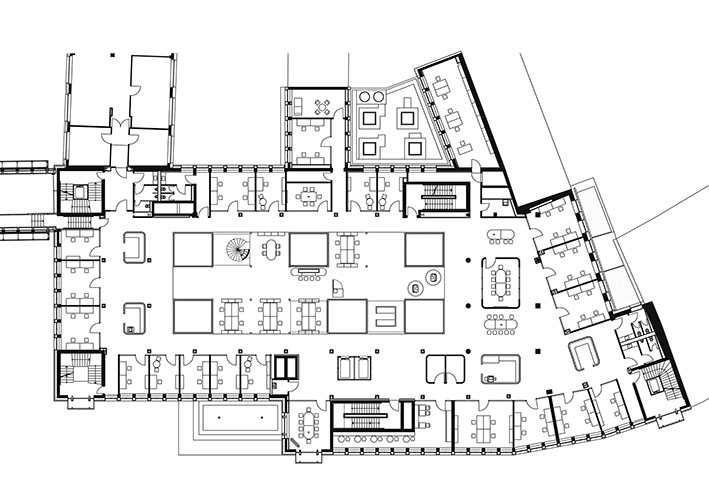
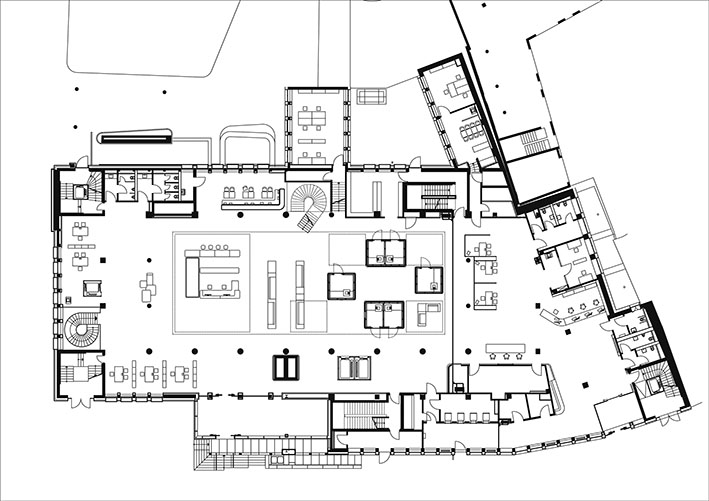
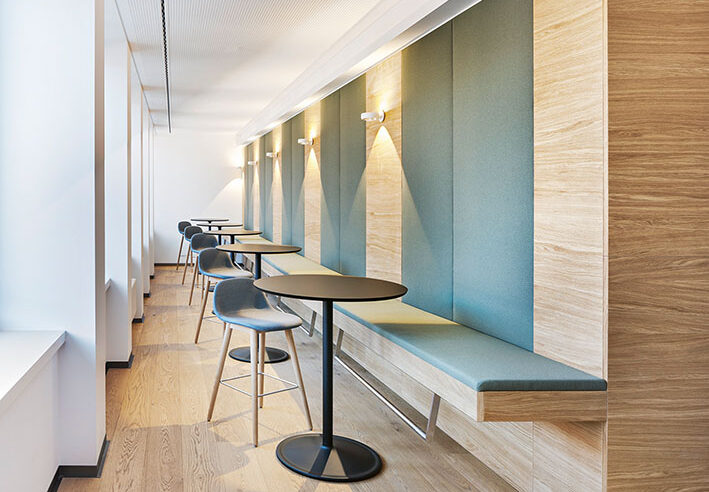
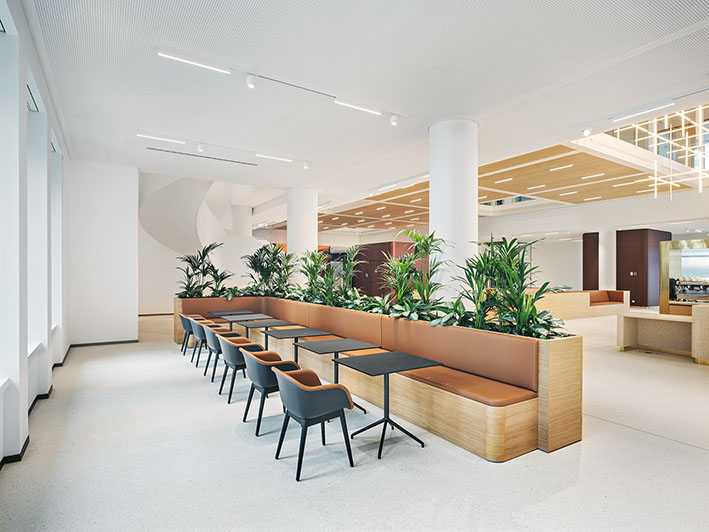
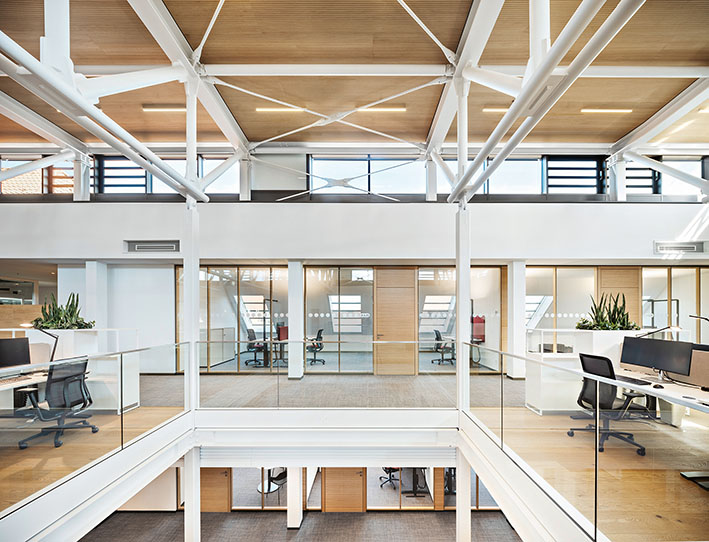
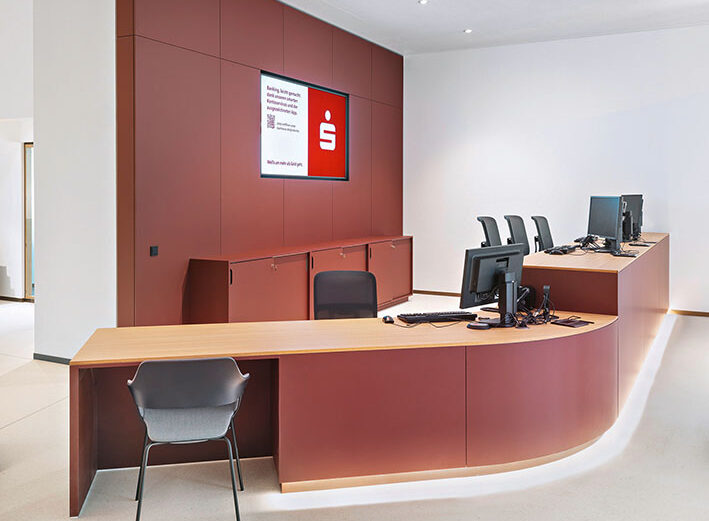
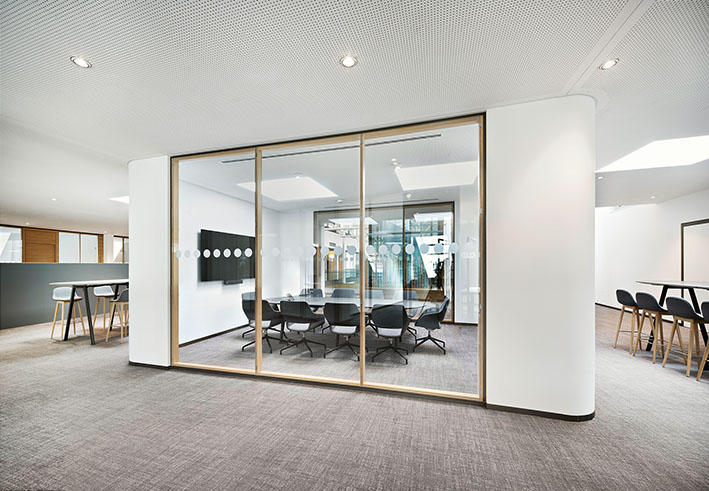
One of its three properties located there was redesigned as part of a listed building ensemble. The structure comprises seven floors, five of them above ground, with 2,916 square meters of office space accommodating 243 employees. During the renovation, the building was stripped back entirely to its load-bearing structure. This made it possible — also incorporating an inner courtyard — to insert a freestanding steel framework forming the interior-defining shelving structure. The central areas of this “shelf,” which shape the space, were suspended across six levels to avoid extensive foundation work in the existing structure. As a result, the geometry of the supports appears very slender. The floor slabs are constructed as solid cross-laminated timber ceilings to reduce loads. This architectural effort was a prerequisite for realizing a new concept: a transparent and openly approachable working environment for both employees and customers. Circulation, orientation, materiality, and lighting design are key components of the overall concept. Non-territorial workstations define the office. On each floor, freestanding boxes were planned to accommodate secondary functions such as wardrobes, employee lockers, and printer stations. The use of the open-office areas is supported by custom furniture, allowing for a wide range of flexible working modes in both process and duration. Lounge areas and zones for quick, direct communication are designed with a residential feel, while traditional desk-based workspaces are optimized for focused tasks. The bright overall atmosphere replaces the former conventionally closed spatial structure, successfully transforming it into a new, expansive workspace that minimizes both physical and functional thresholds and presents itself as equally welcoming for work and for visitors.