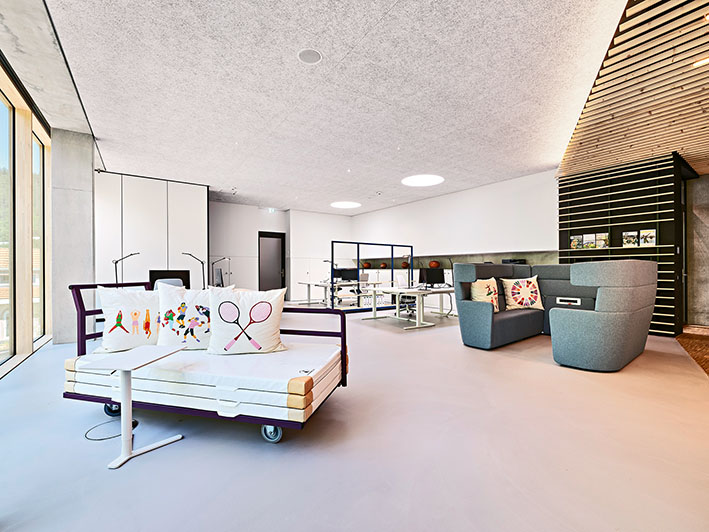
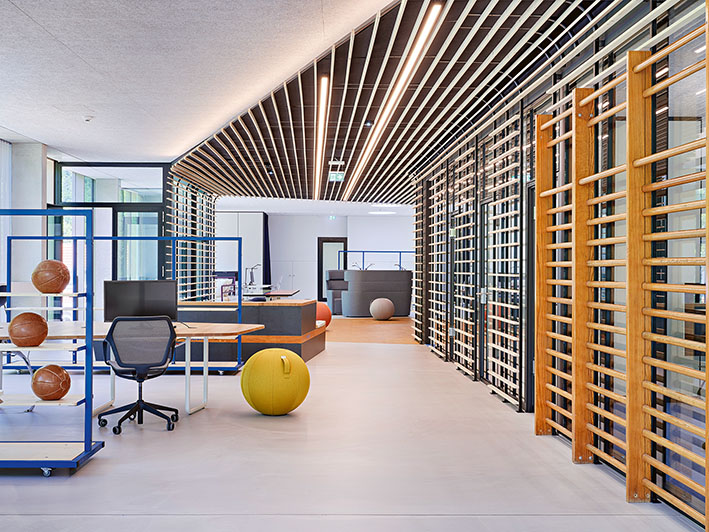
As early as the mid-19th century, the first clubs began promoting physical fitness. Some of these institutions, which are as beneficial to health as they are socially positive, still exist today and are energetically moving into the 21st century. To do so, they need modern organizational
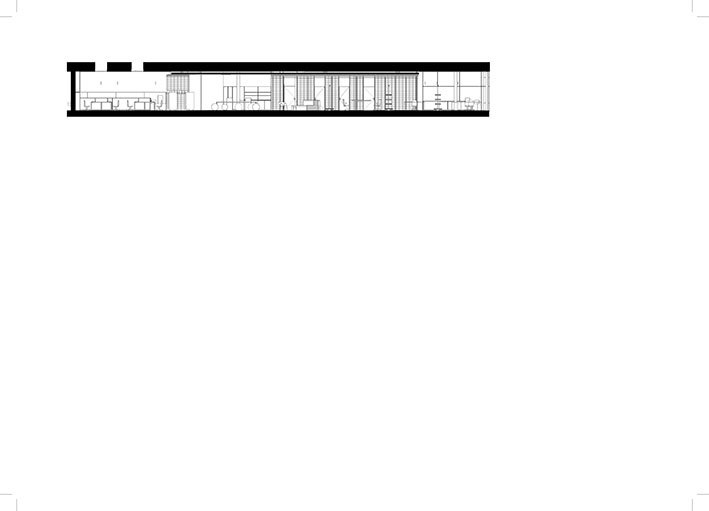
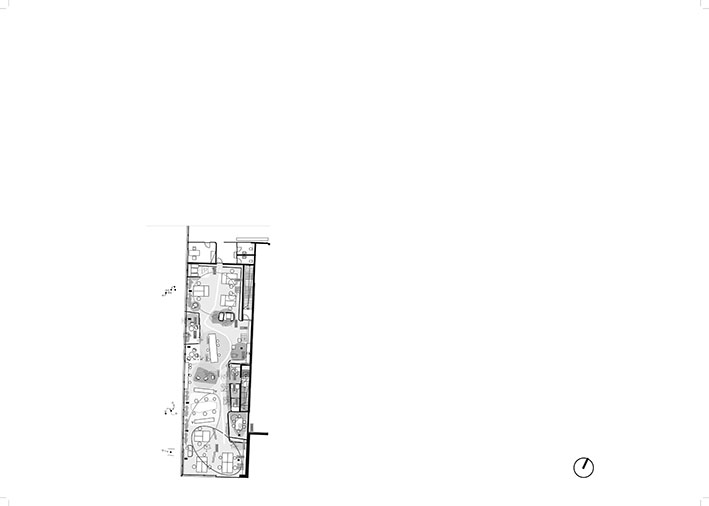
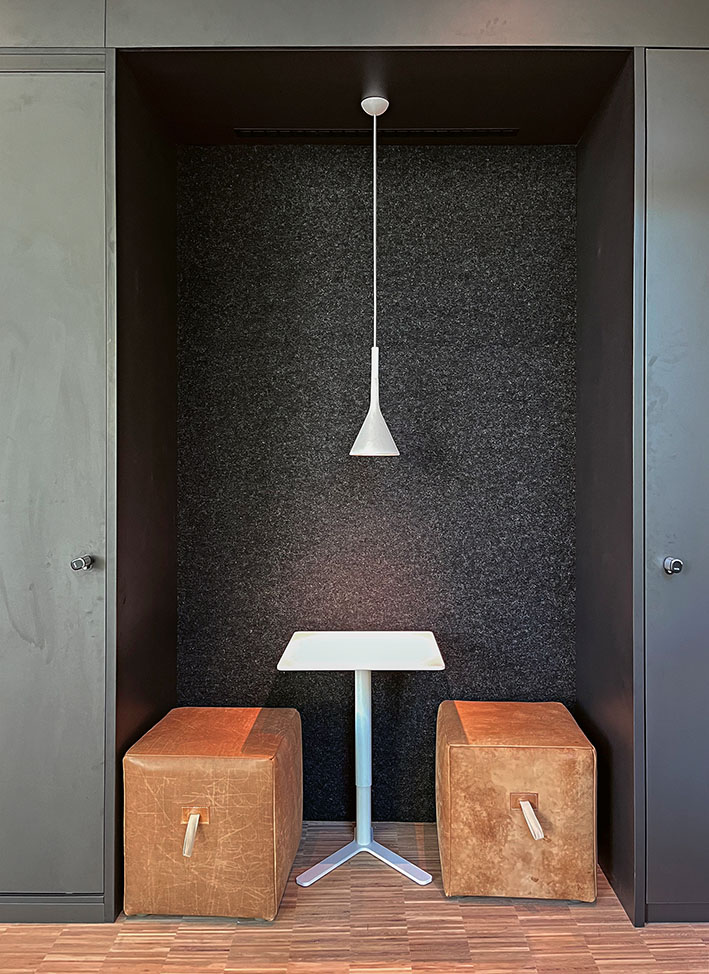
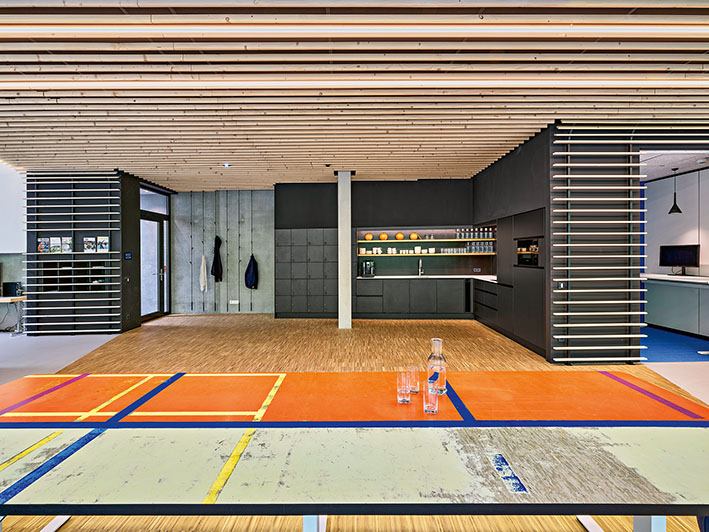
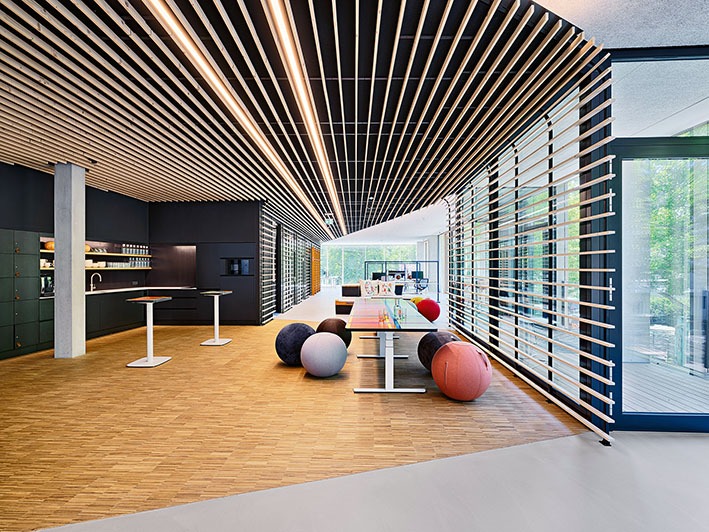
structures as well as facilities. In addition to a large number of members, the “Freiburger Turnerschaft” consists of an administrative and organizational staff, which, with 20 permanent employees and just as many temporary staff, requires an adequate office space on its premises. As befits a club-like community, an open workspace was therefore developed in collaboration with the planners—in a multi-stage, participatory process—featuring a central communication zone on the upper floor of a new wing situated in front of the sports hall. To the north, the semi-public membership administration area, which handles visitor traffic, was allocated its space; to the south, the functions become increasingly private: This is where marketing and IT, management, as well as finance and human resources are located. While the west side facing the sports field is glazed and well-lit, soundproofed functions were placed along the eastern back wall: a phone booth, meeting and work rooms for 1–2 people. The daily comings and goings, casual conversations, and welcome refreshments take place in the central area, which features a communal table and a coffee bar. The interior design, which deliberately avoids using walls to separate the two sections, strives to intuitively guide guests and members ascending from the spacious ground-floor foyer so that they recognize the functions of the respective zones and behave accordingly: public, semi-public, confidential. One indicator of this is, among other things, the sound-absorbing wooden slat ceiling. A glass-enclosed loggia also allows for a casual step outside—unless one is already on the way to the next competition.